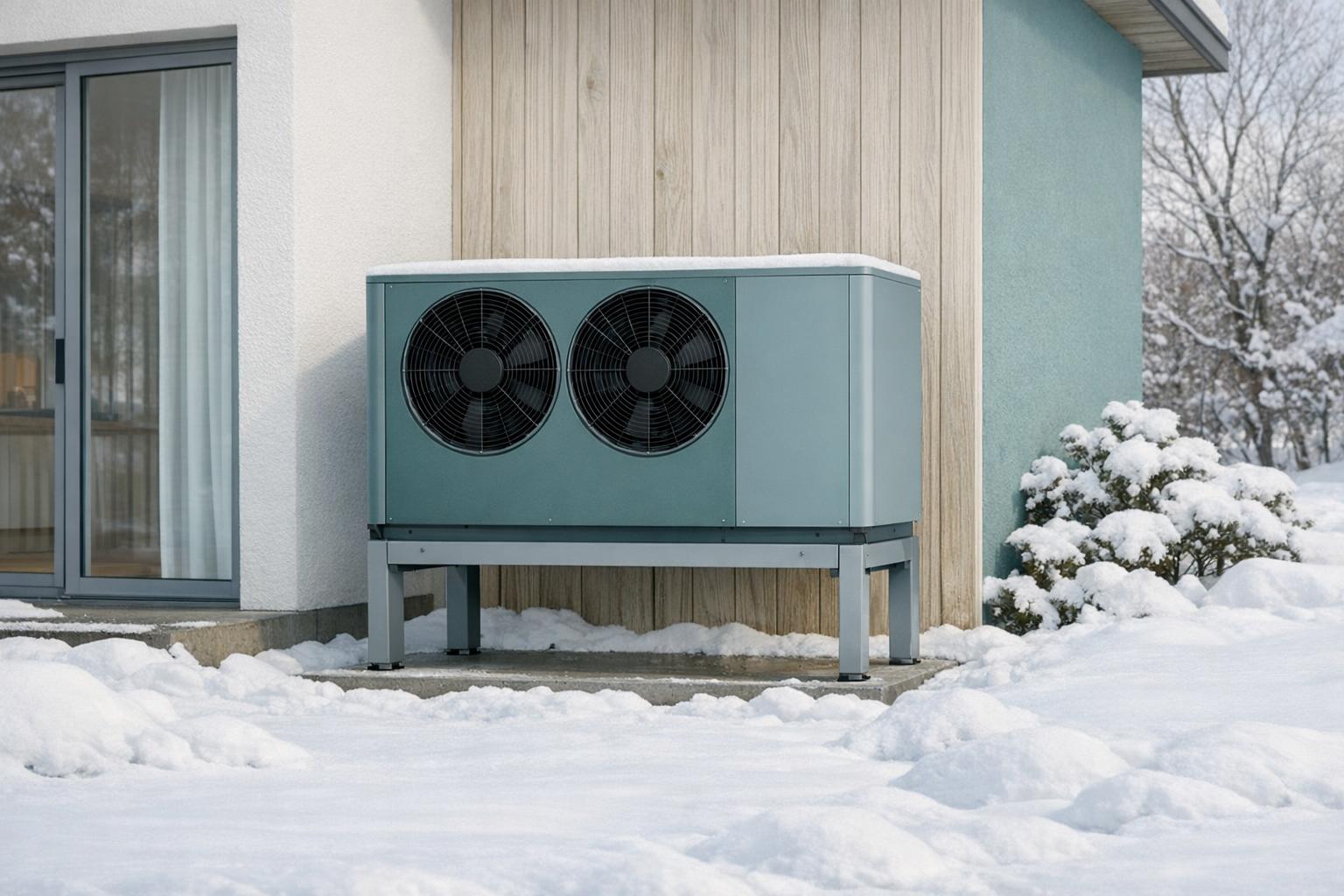
This guide is a purchase-planning reference for US ductless heat pump buyers. It separates the information an online listing can document from decisions that require the exact manufacturer manual and a qualified HVAC professional. We have not installed or physically tested the products in our catalog. Keep the selected indoor and outdoor model numbers together throughout your research; broad family names, lifestyle photographs and nominal capacity labels do not establish that a particular arrangement is right for your home.
Efficiency and capacity answer different questions
A capacity label describes an amount of heating or cooling under stated conditions. An efficiency rating relates useful conditioning to energy input under a defined test framework. These are not interchangeable. A larger BTU number does not mean a more efficient system, and a higher seasonal rating does not establish sufficient heating output on the coldest day. Start a comparison by separating capacity, seasonal efficiency and operating range into different columns. When a seller puts several large numbers in one title, resist choosing whichever looks most impressive. Each number needs its own meaning, unit, configuration and source.
For the related decision, read Mini Split Cold-Weather Performance: What to Check and keep those requirements alongside this checklist.

Keep the rating generation consistent
SEER2 and HSPF2 belong to updated test procedures and should not be casually compared with older SEER and HSPF numbers as though they were the same scale. Avoid applying an improvised conversion factor to make two listings appear comparable. Find documentation that reports the same metric for both exact equipment combinations. If one listing states only SEER, record that limitation rather than renaming the field SEER2. Our extraction follows this rule: the newer label must actually appear. A missing value remains missing, even when a similar model in the same brand family has a well-advertised rating.
For the related decision, read Mini Split Installation: Questions Before You Order and keep those requirements alongside this checklist.
Verify the combination behind the label
A ductless system rating can depend on the indoor and outdoor equipment being paired. A brand name, series name or outdoor-unit photograph is not sufficient identification. Ask the seller or contractor for the relevant certification or manufacturer performance record tied to the exact combination. Multi-zone arrangements require particular attention because changing indoor heads can change the applicable record. Do not borrow a single-zone rating for a multi-zone package or a different voltage variant. If a seller advertises ENERGY STAR, check the appropriate certified product record rather than treating the words in a title as independent verification by this site.
For the related decision, read Mini Split Electrical Requirements: Buyer Checks and keep those requirements alongside this checklist.
Seasonal ratings do not forecast your bill alone
Actual energy use depends on the building, local weather, thermostat settings, occupancy and installation quality as well as the equipment. An efficiency figure by itself cannot establish your annual savings or payback period. Comparing operating costs also needs current local electricity prices and a meaningful baseline for the system being replaced. Keep assumptions explicit and avoid converting a marketing percentage into a household-specific promise. When reviewing an installer estimate, ask which weather and usage inputs it uses. A result based on a different climate or fuel price may be mathematically consistent yet irrelevant to your decision.
Heating performance needs a second look
For a home relying on a mini split in winter, request heating capacity and efficiency at relevant outdoor temperatures. The ability to operate at a low temperature is not the same as delivering the building's required output there. Discuss defrost, the retained heating system if any, and control coordination with a qualified contractor. A cold-climate designation can be useful evidence when verified for the exact product, but it is not a substitute for matching equipment to room loads. Do not interpret a high cooling seasonal rating as proof of winter suitability. The two seasons can impose different constraints on selection.
Use the numbers without overstating them
Our listing-based attribute component can use an explicitly stated SEER2 value, but it remains seller-provided evidence, not a measurement we made. The overall editorial score also includes public review evidence and volume, so it should not be read as an efficiency ranking. If energy performance is your deciding criterion, obtain comparable exact-model records and discuss the expected operating conditions with your installer. Save those records with the purchase proposal. Incentive rules, eligibility dates and installation requirements change, so verify them with the responsible program before purchase; an attractive efficiency label is not a guarantee of a rebate or tax benefit.
Questions to keep with your shortlist
Before following a purchase link, write down the exact configuration, the document supporting its suitability, the installer who accepts the equipment and any unanswered question from this guide. Check the selected variation, included items, current seller and return terms on Amazon. If an answer changes the design, resolve it before ordering rather than relying on a favorable review to fill the gap. Equipment offers and stock are time-sensitive; our displayed values disappear when their captured validity ends.