
Brian Kessler, Installation & wiring writer
I'm the one who reads the installation manual all the way to the end. Not the quick-start card, the whole thing. That's usually where the expensive answers sit: the longest line set the system allows, the breaker size, whether the warranty needs a licensed installer, and what a pre-charged kit lets you do on your own.
Most of what I write is about the parts around the unit. Line sets that look universal and aren't. Wall brackets rated for a weight but not for your siding. A condensate pump bought for a wall where gravity would have done the job. I line the listings up side by side and hold each one against the manual of the exact system, because a part that fits one model can be wrong for the one next to it.
I read a lot of owner reviews too, and I sort them. Complaints about a kinked line set or a missing outlet tell you something about the install; complaints about the unit itself go to Melissa and Yvonne for the rankings. I also edit Melissa's guides on choosing and sizing a system.
I'm not an electrician or an HVAC technician, and I don't write as if I were. When a step belongs to one, the guide tells you which questions to bring them.
Areas of expertise
- Pre-charged DIY kits vs pro installs
- Circuits, breakers and 115V vs 230V
- Line sets, brackets and condensate pumps
- What an install quote should list
How I work
- I read the full installation manual of the exact system, not the quick-start card.
- Every accessory is checked against the manual of the unit it is meant for: line length, flare size, bracket load, pump lift.
- Owner reviews get sorted into install problems and unit problems before they count for anything.
- When a job belongs to a licensed electrician or HVAC contractor, the guide names it and lists the questions to ask.
Articles by Brian Kessler
Written
 Ductless planning
Mini Split Installation: Questions Before You Order
A buyer checklist for installer scope, exact equipment, electrical and drainage planning, commissioning and warranty responsibilities.
Read the guide Ductless planning
Mini Split Electrical Requirements: Buyer Checks
What voltage labels do and do not tell you, why exact nameplate information matters and when to involve a qualified electrician.
Read the guide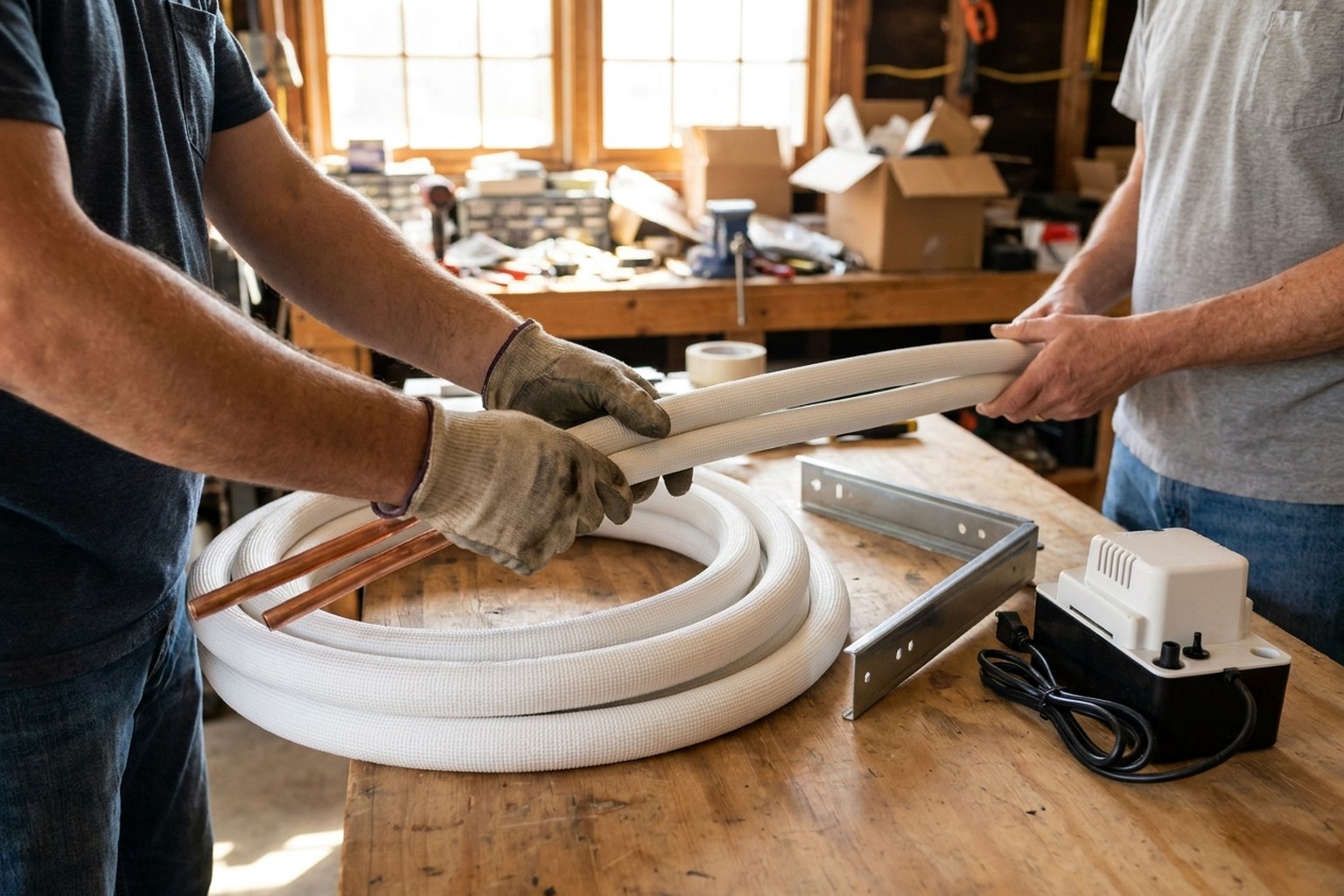 Ductless planning
Mini Split Line Sets and Accessories: Compatibility First
Check exact-model compatibility for line sets, mounts, covers, drains and controls before treating an accessory listing as a solution.
Read the guide Ductless planning
Mini Split Cost to Install: What Drives the Price
What drives mini split installation cost: zones, line runs, electrical work, refrigerant labor and permits, explained with DOE and ENERGY STAR sources.
Read the guide Ductless planning
Can You Install a Mini Split Yourself? Rules and Limits
Can you install a mini split yourself? What EPA refrigerant rules, DIY manufacturer manuals and DOE guidance say, and which tasks stay with licensed pros.
Read the guideEdited
 Ductless planning
How to Choose a Mini Split for Your Home
Plan a ductless heat pump purchase around calculated loads, exact configurations, installation support and documented equipment.
Read the guide Ductless planning
Mini Split Sizing: Loads Before BTU Labels
Understand nominal BTU capacity, room-by-room loads, modulation and why square footage alone cannot size a ductless system.
Read the guideHow we compare and rate the mini splits is explained on How we rate. The rest of the team: Our editors.