Can You Install a Mini Split Yourself? Rules and Limits
Can you install a mini split yourself? What EPA refrigerant rules, DIY manufacturer manuals and DOE guidance say, and which tasks stay with licensed pros.


"DIY" on the box is the reason this question gets asked so often. The honest answer has three parts: what EPA refrigerant rules say, what your exact manufacturer manual says and what your local electrical code requires. This guide doesn't give installation steps. It shows which parts a homeowner can take on with a pre-charged system, and which stay with an EPA-certified tech or a licensed electrician.
Affiliate disclosureAs an Amazon Associate we earn from qualifying purchases made through links on this page. Commissions never change our ratings.
Can a homeowner legally install a mini split?
Short answer You can install a mini split yourself only within limits. Pre-charged systems sold for DIY installation are designed so a homeowner can mount the units and connect the supplied line set, but EPA rules reserve refrigerant service to certified technicians, and DIY manufacturer manuals still require a licensed or certified electrician for the electrical supply.
The key distinction is between installing equipment and handling refrigerant. EPA regulations under Section 608 of the Clean Air Act require that technicians who maintain, service, repair or dispose of equipment that could release refrigerants be certified. EPA's refrigerant sales restriction limits who can buy refrigerant, but it states that the restriction does not cover refrigeration and air-conditioning equipment or components containing refrigerants. That is why pre-charged equipment can be sold to homeowners while bulk refrigerant cannot.
- Equipment purchase: EPA's sales restriction does not cover equipment or components containing refrigerant.
- Refrigerant service: reserved to EPA Section 608 certified technicians.
- Electrical supply: manufacturer manuals require a licensed or certified electrician.
- Local rules: permits and inspections depend on your jurisdiction.
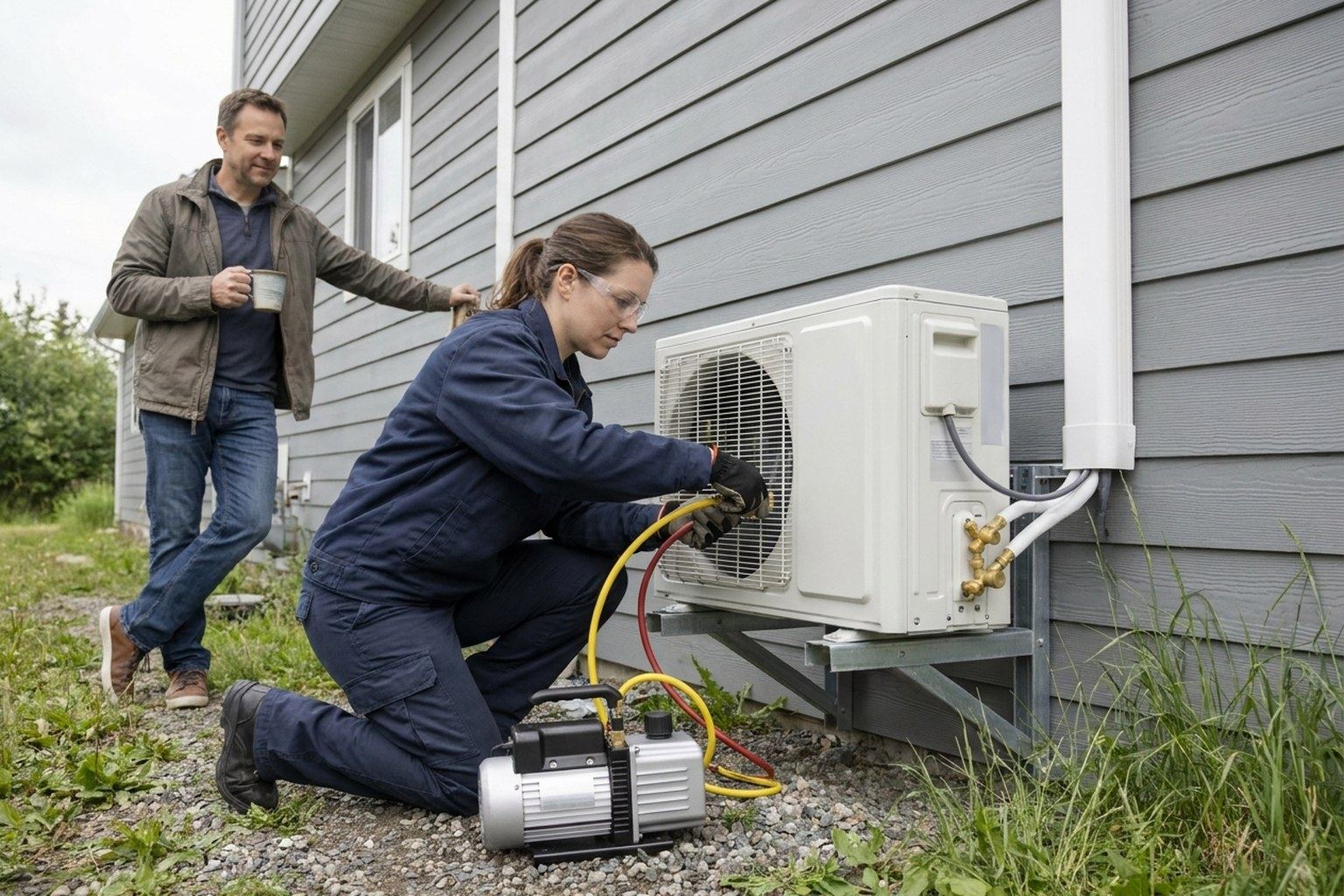
What EPA Section 608 rules cover
EPA's certification page states that technicians who maintain, service, repair or dispose of equipment that could release refrigerants into the atmosphere must be certified, and that they must pass an EPA-approved test specific to the type of equipment they work on. EPA's sales-restriction page adds that only EPA-certified technicians are allowed to purchase refrigerants, with limited exceptions.
For a conventional split system, that matters because the line set is typically connected, pressure-checked, evacuated and charged on site. PNNL's Building America guide describes pressure-checking the system with nitrogen per manufacturer specifications and states that refrigerant charging must be done by an EPA certified technician. Those are not homeowner tasks.
| Task | Conventional split system | Pre-charged DIY-marketed system | Source |
|---|---|---|---|
| Buy the equipment | Homeowner or contractor | Homeowner | EPA sales restriction |
| Refrigerant charging or recovery | EPA-certified technician | EPA-certified technician if ever needed | EPA; PNNL |
| Line-set connection | Installer per manufacturer specs | Homeowner with supplied quick-connect line set, per manual | PNNL; MRCOOL |
| Electrical supply and disconnect | Licensed electrician | Licensed or certified electrician per manual | MRCOOL manuals |
| Load calculation and sizing | HVAC professional | Still needed; buy the right size | PNNL; ENERGY STAR |
The same line applies after installation: our mini split AC repair guide shows which fault checks stay with the owner and which go to a certified technician.
What DIY systems change, and what they do not
Systems sold for DIY installation avoid on-site refrigerant work by shipping with pre-charged, sealed line sets. MRCOOL's quick-start guide for its DIY Multi-Zone system says installing it does not require specialized tools or training but does require basic technical skills, and warns that you are assuming the risk of handling materials containing refrigerants under pressure.
The full MRCOOL manual adds conditions that matter for warranty. It states that the line sets are designed to be installed only once, that the seal cannot be guaranteed if they are installed more than once, and that doing so will void the warranty. It also warns that screw connections tightened with too little torque will leak. Read your own model's manual in full before buying; our line-set compatibility guide explains why accessories must match the exact system.
- Read first: download the exact model manual before ordering.
- Respect one-time parts: quick-connect line sets are designed to be installed once.
- Follow torque values: under- or over-tightened connections can leak or be damaged.
- Know your limit: if you are not comfortable, hire a qualified HVAC professional.

Electrical work stays with a licensed electrician
Even systems sold for DIY installation do not hand the electrical work to the homeowner. The MRCOOL DIY manual states that all wiring must comply with local and national electrical codes and be installed by a licensed electrician. The quick-start guide says a certified electrician is required to supply power from a disconnect of an appropriate rating. Our guide to mini split electrical requirements lists the buyer-side questions; it does not give wiring instructions, and neither does this article.
Plan the electrician's visit as part of the project from the start, and ask them to confirm that your panel and supply suit the exact model you are considering. The same manual tells owners not to share the unit's circuit with other appliances and not to use an extension cord, which is another reason the supply is designed before the equipment arrives.
Keep the electrician's paperwork with the equipment manual. If the system ever needs warranty service, the manufacturer may ask how and by whom it was connected, and a written record answers that question quickly.
Warranty, sizing and the risks of going alone
DIY installation does not remove the design work. ENERGY STAR says a system that is too large or too small will struggle to meet your comfort needs and that your contractor should verify the proper size. DOE adds that oversized or incorrectly placed air handlers can short cycle and that an oversized system is more expensive to buy and operate. Start with mini split sizing and load calculations.
Warranty terms are the other risk. The MRCOOL manual states that installation must follow the installation instructions and that improper installation could cause water leakage, electrical shock or fire, and could void the warranty. DOE's own advice for any minisplit is to hire an experienced installer for maximum energy savings.
| Risk | What the source says |
|---|---|
| Refrigerant under pressure | Homeowner assumes the risk of handling it (MRCOOL quick start) |
| Leaking connections | Too little torque will leak (MRCOOL manual) |
| Reused line sets | Seal not guaranteed; voids the warranty (MRCOOL manual) |
| Wrong size | Short cycling and higher cost (DOE; ENERGY STAR) |
A sensible split of responsibilities
For most homeowners, the practical answer is a shared project: you choose the equipment and handle the tasks the exact manual assigns to the owner, a licensed electrician handles the supply, and an EPA-certified technician is on call for anything involving refrigerant. Compare documented 18,000 BTU mini splits and DIY-marketed listings by their manuals, not their box claims.
- Before buying: confirm the model manual, required line length and electrical rating.
- Before mounting: confirm head and outdoor-unit locations and drainage.
- Before powering on: have the licensed electrician complete and document the supply.
- After start-up: keep the manual and a service record for warranty claims.
If any step is unclear, our checklist of questions to ask an installer is a good place to restart the conversation with a professional.
Our rated picks
The three best-rated models of our best 18,000 BTU mini splits in 2026 ranking, from the buyer review record and the listed specs.


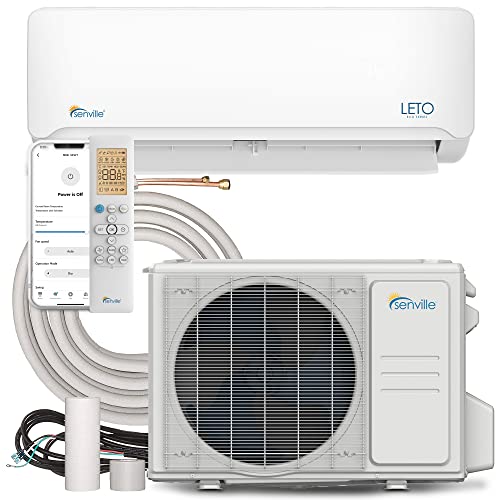
Product images: Amazon listings
Sources and further reading
- U.S. EPA: Section 608 Technician Certification Requirements
- U.S. EPA: Section 608 Refrigerant Sales Restriction
- PNNL Building America Solution Center: Ductless (Mini-Split) Heat Pumps (DOE-funded guide)
- MRCOOL: DIY Multi-Zone 3rd Gen quick-start installation guide (manufacturer PDF)
- MRCOOL: 4th Gen DIY Multi-Zone Installation & Owner's Manual (PDF copy, version 06-06-2023)
- ENERGY STAR: Ductless Heating & Cooling (mini split heat pumps)
- U.S. DOE Energy Saver: Ductless Minisplit Heat Pumps (archived June 18, 2026)
- Exact listing reference: YITAHOME 12000 BTU Mini Split AC/Heating System 115V 20 SEER2 (exact listing)