Mini split repair: what to check before you call a tech
Mini split AC repair starts with owner checks: power, mode, filters, the drain and the outdoor unit. What each symptom means and when to call a tech.

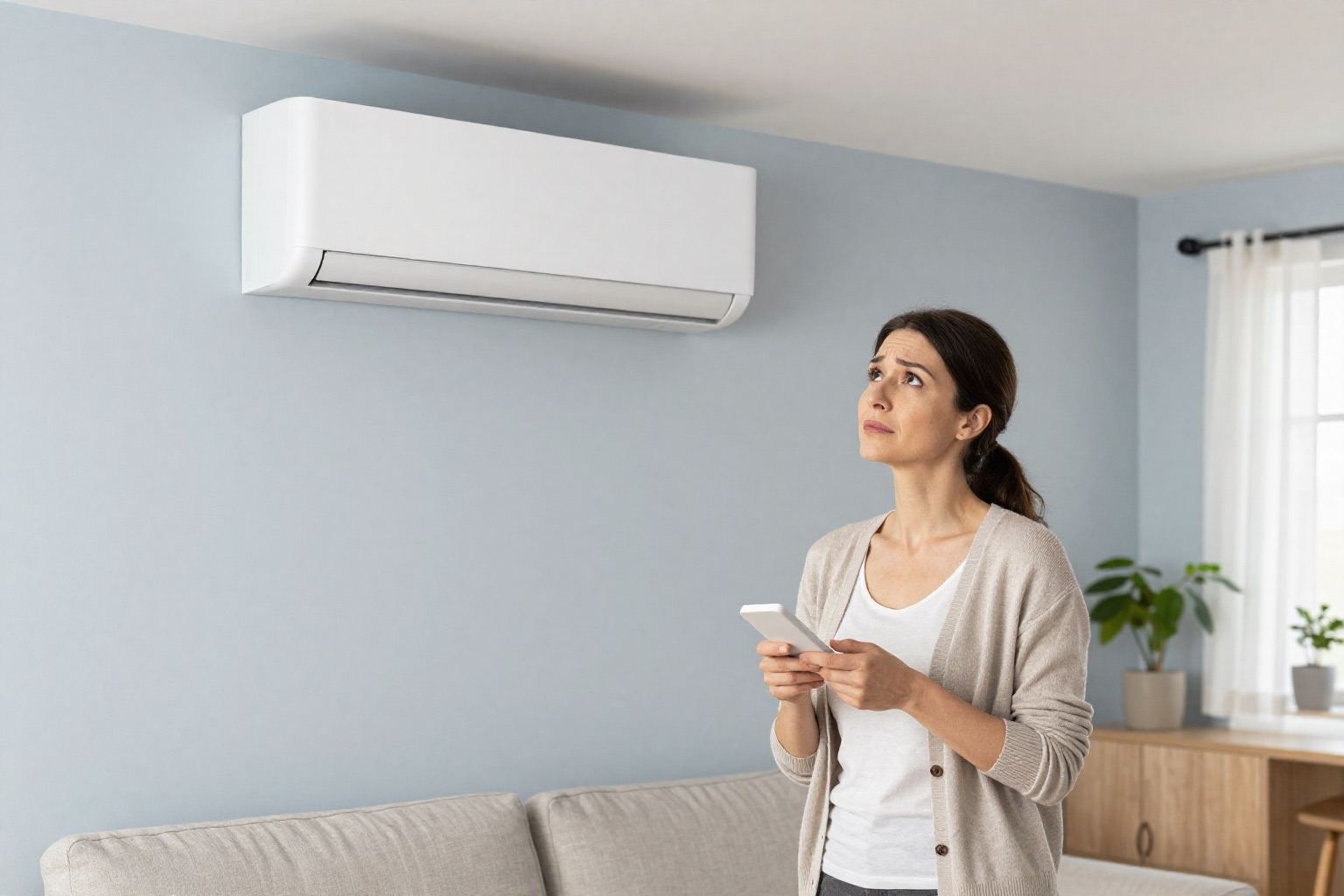
Most mini split repair calls start with something you could spot in ten minutes: a tripped breaker, a filter matted with dust, a remote stuck in dry mode, leaves packed against the outdoor coil. Some don't, and those deserve a tech quickly. Here are the troubleshooting checks worth doing first, what each symptom usually points to, and where your part of the job stops.
Affiliate disclosureAs an Amazon Associate we earn from qualifying purchases made through links on this page. Commissions never change our ratings.
Before you book a repair: the ten-minute checks
Short answer Check the power, the remote, the filters, the outdoor unit and the drain before you call anyone. If the system still won't cool or heat after that, or you see ice, hear hissing or get the same error code twice, book an HVAC technician. Anything that touches the refrigerant is, by law, a job for an EPA-certified tech.
None of this needs a tool or a panel your manual doesn't tell you to open. Go in this order: each step rules out a cheap cause before an expensive one.
- Power: check the breaker and the outdoor disconnect. DOE's advice: let the unit sit five minutes before you reset it.
- Remote and mode: fresh batteries, cool or heat (not fan or dry), a setpoint that actually asks for cooling or heat, and no timer switching it off.
- Filters: slide out the mesh filters behind the front panel. If you can't see light through them, you have your first suspect.
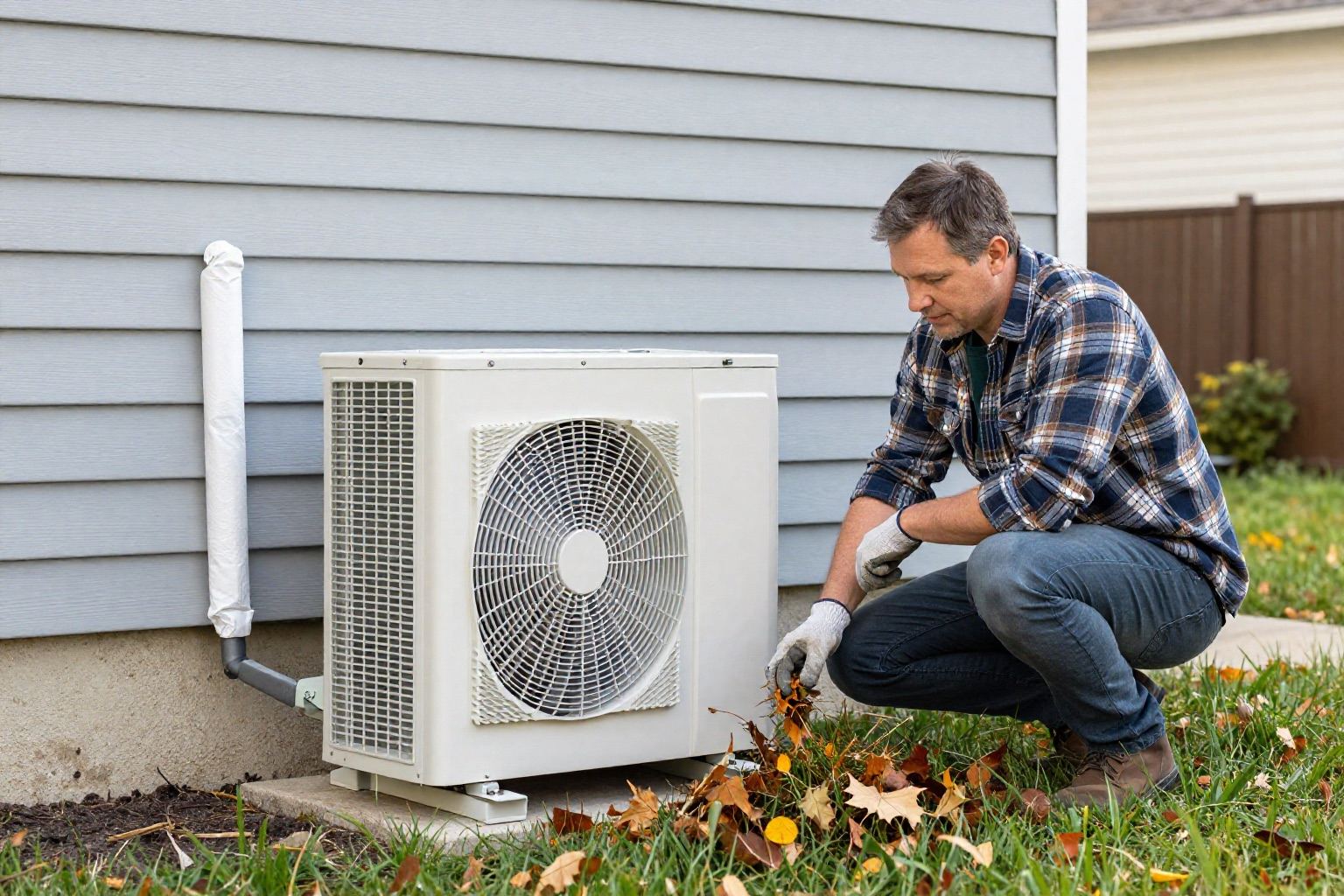
- Outdoor unit: is the fan turning? Leaves, clippings, snow or a forgotten cover all choke it.
- Drain: water on the wall under the head, or a pump alarm, points to the condensate side, not the refrigerant side.
Write down what you find, with the time, the mode and any code on the display. That note keeps a service visit short.
What the symptom usually points to
The symptom tells you which side of the line you're on: something you can clear yourself, or something a tech has to measure. Treat this table as triage, not a diagnosis.
| Symptom | Often points to | What you can check | Who fixes it |
|---|---|---|---|
| Runs, but barely cools or heats | Clogged filters, dirty indoor coil, wrong mode or setpoint | Filters, mode, setpoint, open windows | You first, then a tech |
| Indoor unit on, outdoor unit silent | Tripped breaker or disconnect, control, fan or compressor fault | Breaker, disconnect, the error code | Electrician or HVAC tech |
| Ice on the indoor coil or the copper lines | Restricted airflow or a refrigerant problem | Fan only to thaw it, then the filters | A tech if it comes back |
| Water dripping from the indoor head | Blocked drain, kinked line, failed pump, head not level | Drain outlet, pump reservoir and alarm | You for the outlet, a tech for the rest |
| Short on-off cycles | Oversized system, sensor or control problem | How often, and in which mode | HVAC tech |
| Outdoor unit steams and pauses in winter | A normal defrost cycle | Keep the base clear of snow and ice | Nobody, unless it never restarts |
| Hissing, bubbling, oily marks at the connections | Possible refrigerant leak | Switch it off and note it | EPA-certified tech |
Short cycling is often a sizing problem rather than a broken part: DOE notes that an oversized or badly placed indoor unit can short cycle and costs more to run, and no repair shrinks a system that's too big for the room.
Water dripping from the indoor unit
Water on the wall under the head looks alarming and usually has a boring cause. The head pulls moisture out of the air while it cools, and that water leaves through a drain line, by gravity or through a small condensate pump. Block the path and the tray spills. DOE warns that the extra moisture can stain walls and carpet, so don't leave it for the weekend.
- Find the outlet: follow the drain line outside and make sure the end isn't buried in mulch, crushed or frozen shut.
- Look for a kink or a sag: a line that dips or climbs on its way out holds water.
- Check the pump: if you have one, its reservoir and float can gum up. DOE's advice is to keep condensate pumps free of debris; the pump manual says how.
- Check the head is level: a bracket that settled or a knock from a ladder can tilt the tray the wrong way.
If the drain is clear and it still drips, or water beads on the copper lines, call your installer: sweating lines usually mean damaged insulation. A dead pump is a routine swap, but match its lift and flow to your drain run; our line sets and accessories guide explains why fit beats the box claims.
Weak airflow? Start with the filters
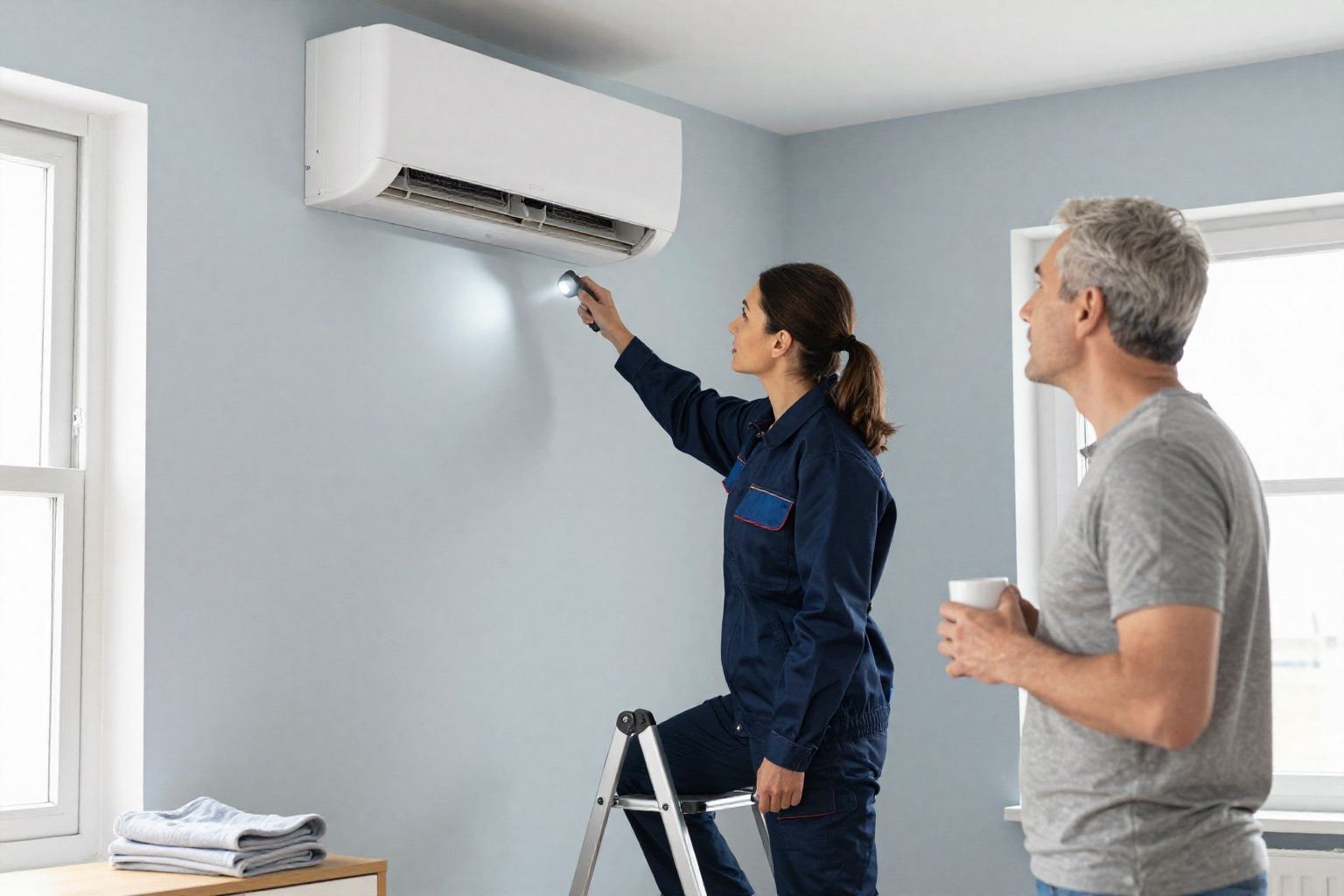
If the unit runs but the room never gets there, look at the filters first. DOE calls filter care the most important maintenance task for an air conditioner: clogged filters cut airflow, air slipping around them dumps dust onto the coil, and a clean filter in place of a clogged one can lower energy use by 5% to 15%. ENERGY STAR's rule for ductless heat pumps: clean the filters when they look dirty or the filter light comes on.
Most mini split filters are washable mesh: rinse as the manual says, dry completely, slide back. DOE suggests a look every month or two in the cooling season, more often with pets or dust. With a dog and a head in the living room, we'd check every couple of weeks in July.
Clean filters and still weak air? Dark specks on the blower wheel or a musty smell mean the coil and blower need a proper clean, and DOE recommends checking the indoor coil yearly anyway. A surface clean with a fitted bag kit is within reach for many owners; a deep clean with the blower out is technician work, and opening more than the manual allows can cost you the warranty. Our maintenance checklist sorts out which jobs are yours.
The outdoor unit: clearance, ice and winter defrost
The outdoor unit dumps the heat your head collects, so anything blocking its airflow shows up indoors as weak cooling. DOE names dryer vents, falling leaves and lawn mowers as typical dirt sources and recommends keeping at least 2 feet (0.6 meters) clear around the unit. In autumn that's often the whole repair: wet leaves against the back of the coil.
Ice is a different story. Light frost on the outdoor coil in heating mode is normal, and the unit melts it off in a defrost cycle; many owner's manuals describe heating pausing for a few minutes while steam rises off the outdoor unit. ENERGY STAR adds that the defrost water can freeze into icy patches, so mind the path next to it. If the coil stays wrapped in ice or the unit never restarts, switch it off and call. Our guide to cold weather performance covers what a heat pump should and shouldn't do on a hard winter morning.
Indoors, ice on the coil or the copper lines in cooling mode is a warning sign. Run fan only until it thaws and check the filters. If the ice comes back, it's a call for a tech: low airflow and low refrigerant can both cause it, and only one of them is yours to fix.
Error codes, blinking lights and resets
Every brand uses its own codes, so a list from a forum or another model can send you the wrong way. Only the manual or the maker's support page for your exact model numbers counts. Those numbers are on the labels of both units; photograph them now.
When a code shows up, note the code, the time, the mode and the weather. Then reset once: power off at the breaker or disconnect, wait at least five minutes, power back on. If the code clears and stays gone, good. If it returns, stop resetting. A protection code that keeps coming back means a sensor, a fan motor, a board or the refrigerant circuit needs a look, and restarts fix none of those.
Before you call, pull out the warranty papers. Many manufacturers want warranty work done by a contractor they accept, and some ask who installed the system. The purchase date, the installer's invoice and your code log on one page make that call much quicker.
Where your part of the job stops
Refrigerant is where the law draws the line, not your confidence. EPA rules under Section 608 of the Clean Air Act require technicians who maintain, service or repair equipment that could release refrigerant to be certified, and only certified technicians may buy refrigerant. So "topping up" isn't a DIY job, and rarely the right fix. DOE's guidance is that a system low on refrigerant was either undercharged at installation or leaks, and that a trained technician should fix the leak, confirm the repair and then charge the system correctly.
- Yours: breaker and settings, filters, clearing the outdoor unit, the drain outlet and a written fault log.
- The HVAC tech's: refrigerant leaks and charge, ice that keeps returning, compressor and fan motors, boards and sensors, deep coil and blower cleaning.
- The electrician's: the circuit, the disconnect and anything inside your panel.
DOE also lists corroded wires and terminals as a cause of control failures; that's checked during a service call, with the power off. When you book, ask for a written finding and an itemized quote before any work starts. A good tech tells you what they measured, what failed and what the part costs.
Repair or replace?
Nobody can quote a fair repair price without seeing the unit, and we won't make one up. Put the quote next to the cost of a new system instead. A leak on a young unit under warranty is worth fixing. A failed compressor on an old, out-of-warranty system is where many owners start pricing a replacement.
If you get there, start from our rankings rather than a sale banner. The best 12,000 BTU mini splits are led by the Mountman 12,000 BTU 110/120V, rated 9.2/10 ($429.98 on Oct 30, 2026, may have changed), the 18,000 BTU ranking by the Rellytech 18,000 BTU 208-230V, rated 9.2/10 ($514.99 on Oct 30, 2026, may have changed) and the multi-zone ranking by the ROVSUN 3-Zone 28,000 BTU (9K/9K/9K), rated 9.1/10 ($1,619.97 on Oct 30, 2026, may have changed). Then add the installation side, which our installed cost guide breaks into line items, and ask the installer whether your line set and circuit can be reused rather than assuming they can.
Frequently asked questions
Can I repair a mini split myself?
Partly. The owner checks are yours: breaker and disconnect, remote and mode, washable filters, clearing the outdoor unit and the drain outlet. Anything that involves refrigerant needs an EPA Section 608 certified technician, and the circuit and disconnect belong to a licensed electrician.
Why is my mini split running but not cooling?
Start with the filters, the mode and the setpoint, then make sure the outdoor fan turns and the coil isn't blocked. If all of that is fine, or you see ice on the lines, call a tech: low refrigerant and failed parts need measuring, not guessing.
Why is my mini split leaking water inside?
Usually the drain is blocked, kinked or frozen at the outlet, the pump has failed, or the head is no longer level. Switch it off, check the outlet and the pump, and call your installer if it keeps dripping.
Is it normal for the outdoor unit to steam and stop in winter?
Yes, that is usually the defrost cycle melting frost off the coil, and the meltwater can freeze near the unit. It is a problem only when the unit stays covered in ice or never starts heating again.
How much does mini split repair cost?
It depends on the fault, the parts and whether refrigerant work is involved, so ask for a diagnostic visit and an itemized quote. For a large repair, compare that quote with a new system plus installation, using our installed cost guide.
Who repairs ductless mini splits?
An HVAC contractor with EPA Section 608 certification who services your brand. Under warranty, ask the manufacturer which contractors it accepts before you book.
Our rated picks
The three best-rated models of our best mini splits in 2026 ranking, from the buyer review record and the listed specs.


Product images: Amazon listings
Sources and further reading
- U.S. DOE Energy Saver: Common Air Conditioner Problems (archived June 8, 2026)
- U.S. DOE Energy Saver: Maintaining Your Air Conditioner (archived December 15, 2024)
- ENERGY STAR: Ductless Heating & Cooling (mini split heat pumps)
- U.S. DOE Energy Saver: Ductless Minisplit Heat Pumps (archived June 18, 2026)
- U.S. EPA: Section 608 Technician Certification Requirements
- U.S. EPA: Section 608 Refrigerant Sales Restriction
- Exact listing reference: Compact Mini Split Condensate Pump, Ultra Quiet <19 dB, 110-240V (exact listing)